
After exploring Panama’s cities and mountains, Andy & I were ready for some beach time. The guide books talked about Bocas del Toro, a group of six densely forested islands, as being Panama’s principal tourist draw card. This made us a little trepidatious about going there, since we prefer to visit less visited places. But, we ventured to Bocas anyway.
There are some gorgeous places to stay on the less inhabited of the six islands, but we were saving our splurge for San Blas, so we stayed on the main island, Isla Colon, where accommodations were more reasonable, but still overpriced for what they offered.
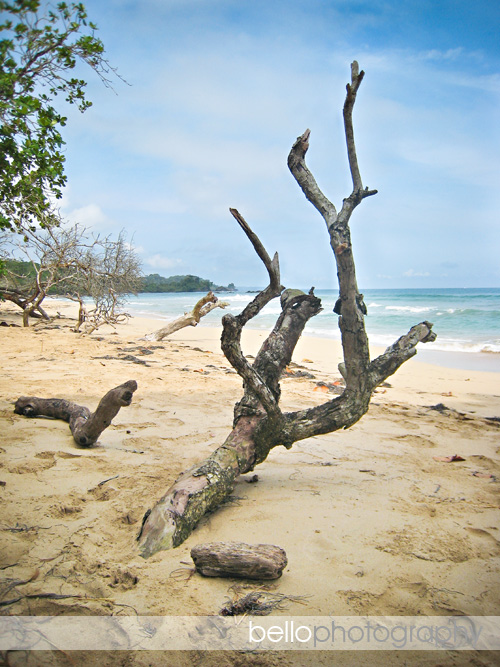
And, while Bocas wasn’t really our scene, we had a couple of fabulously languorous beach days both on Colon and on the smaller, less inhabited Isla Bastimento, a five minute boat ride away. This next photo was taken at Red Frog Beach, on Bastimento, which has one of the nicer beaches in the archipelago. The beach had tons of tourists later in the day…we got there early to soak in the natural beauty…
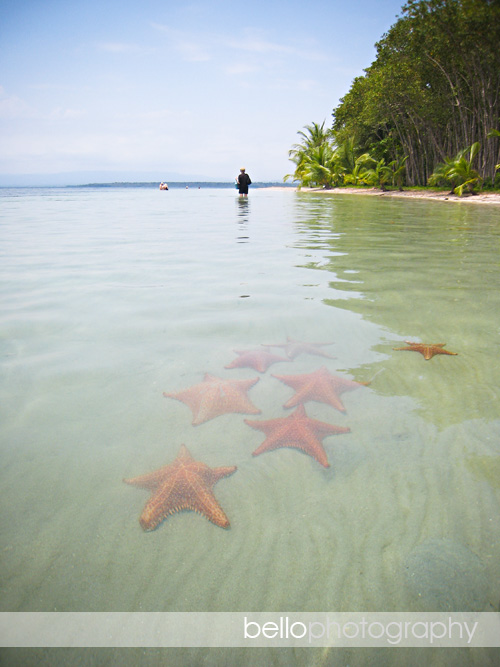
We visited Playa Estrellas, Starfish Beach, on our second day in Bocas. It wasn’t a particularly fabulous beach. It was good for children, since it was shallow and very calm, with tons of starfish everywhere. But, there wasn’t much of a shore line for parking your butt. It didn’t really make sense to spend too much time at this beach as there wasn’t much to do or see, so visitors came and left relatively quickly. The woman in the photo had biked all the way from town, which took her 4 hours over muddy, unpaved roads. I’d guess she was in her 60s…a total rockstar in my book!
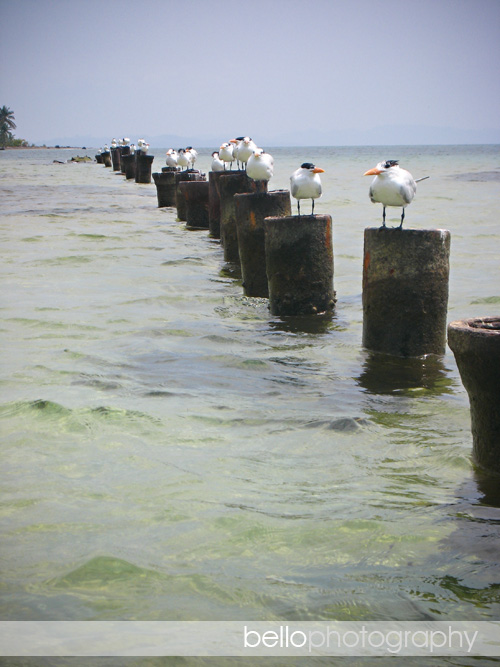
We made the most of our time at Starfish beach, then walked back about a mile to where the bus dropped us off to do some more chillin’. There by a beach-side restaurant, we spent the rest of the day, playing cards and swinging in hammocks till the last bus of the day came to pick us up. In this next photo a bunch of sea birds sun themselves on pilings just off shore. We tried taking the photo from shore, but it was a much better perspective wading in up to our waist. We’ll do anything for a good photo.
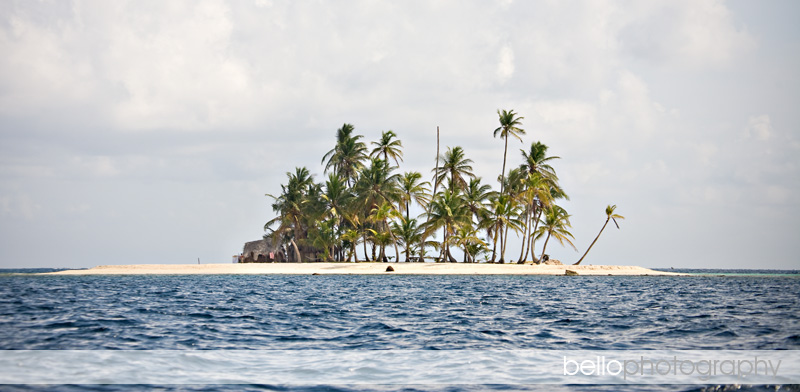
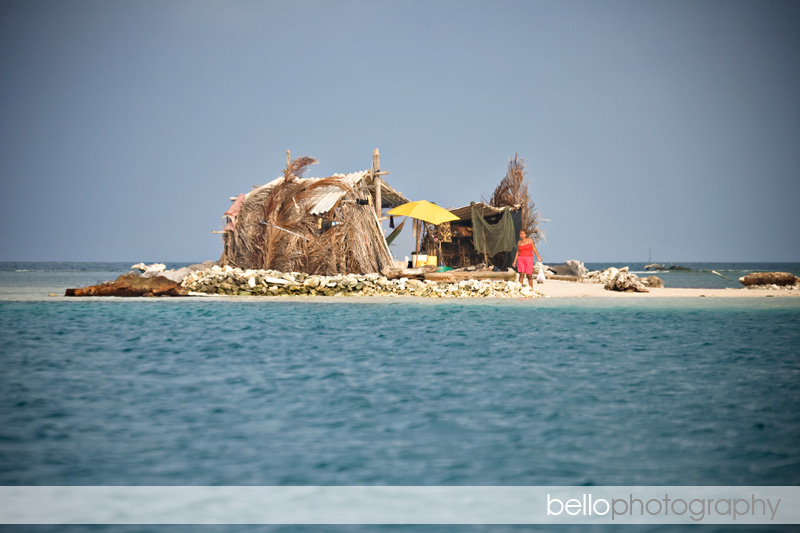
Our visit to Panama ended with 4 heavenly days in San Blas, an archipelago of some 365 islands off the north coast of the Isthmus, east of the Panama Canal. Home to the Kuna Indians, the islands, some of which are no bigger than 30 feet in diameter, are part of the comarca Kuna Yala, along the Caribbean coast of Panama. Most of the Kuna island dwellers live on just a few of the islands, though several, like Isla Pelicano seen below, have one house made from bamboo and palms, that is inhabited by a single Kuna family. Like many visitors to San Blas, we flew from Panama City to the Kuna Yala captial of El Porvenir on the mainland, then took a short boat ride to the island of Whichub Wala, the most densely populated of the islands. Home to some 400 Kuna, you can easily walk from one end of the island to the other in less than three minutes. The Kuna rely heavily on tourism, fishing and the exportation of coconuts, lobsters and plantains to survive. Being so densely populated and having plumbing only in the hotels for tourists (although the piping goes directly into the ocean), the water around the island is too polluted for visitors to swim. So, our hotel guide, Orlando, took us and other hotel guests on daily boat trips to visit some of the less or not at all inhabited islands in the Kuna Yala. Isla Pelicano was our favorite island (seen below) so we spent a couple of days here, chillin’ under palm trees, snorkeling, reading and just enjoying the incredible views and the crazy aqua-colored water.
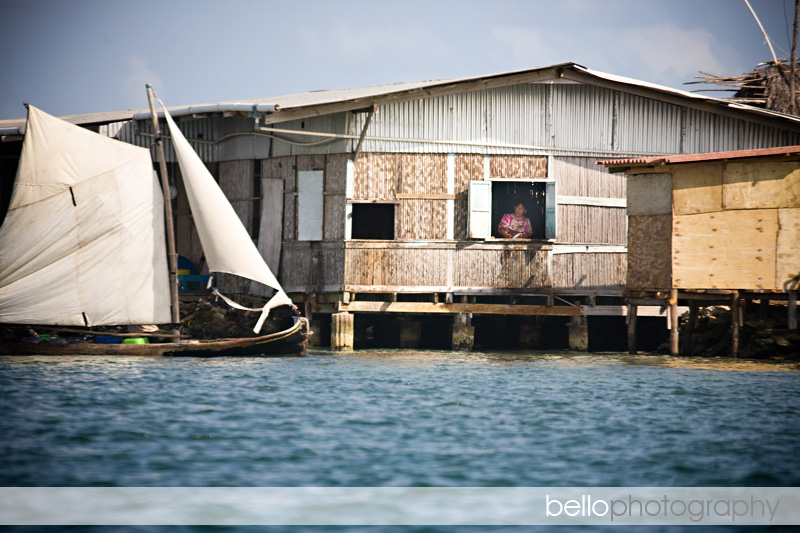
Below a Kuna woman looks out her window. Most of the houses not directly over the water were made entirely out of bamboo and palm. But, the hotels and those houses that were over the water, like the one below, used wooden frames and corrugated steel for the roof.
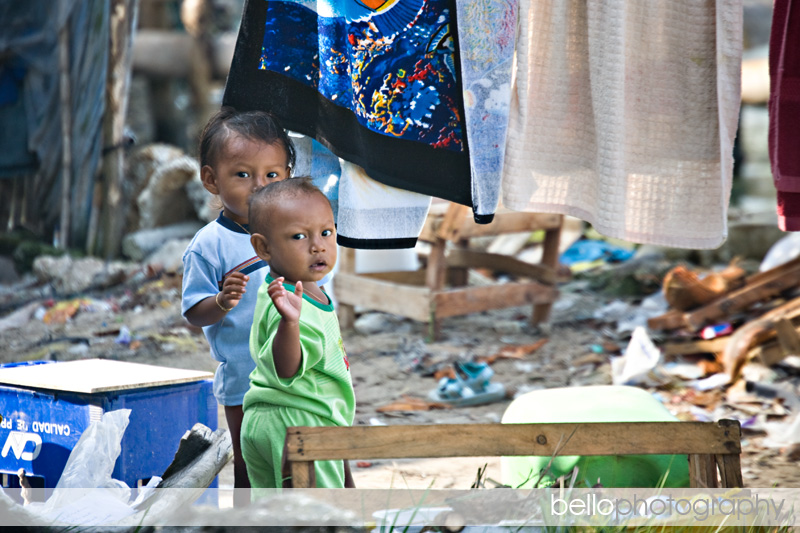
San Blas is an absolutely stunning region of the world, with pristine uninhabited islands and water like none we’ve seen before. But, with a growing reliance on tourism, there are new problems, namely with waste disposal. It was hard to see discarded plastic, aluminum beer cans, and other waste used as a sort of erosion control on the perimeter of the more inhabited islands, especially for a people who, at least from what we could understand, have a faith/culture that seem to feel a real connection with Mother Earth.
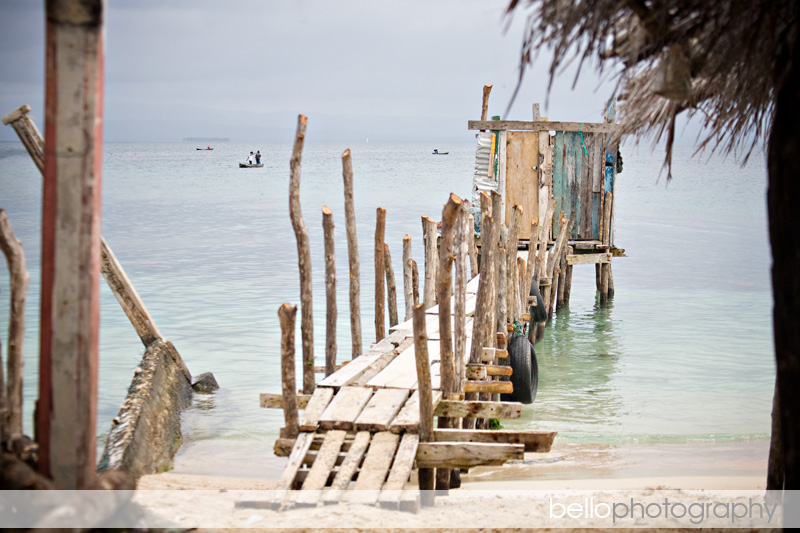
The few hotels on the island of Wichub Wala did have toilets that flushed, but they flushed right out into the ocean and locals use these outhouses, which were nothing more than a hole in the floor surrounded by four walls.
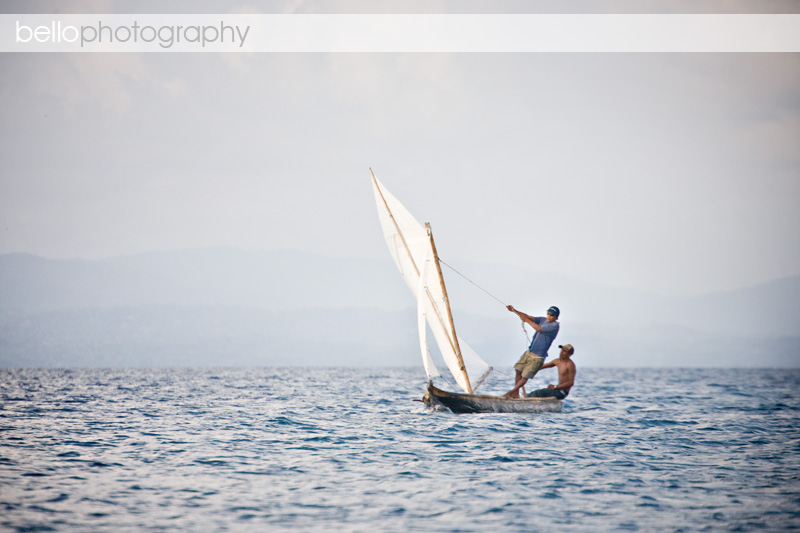
Fishing is a big activity for the men. And, many of the boats they use are made from hollowed out trees. The boats are simultaneously beautiful and perfectly functional.
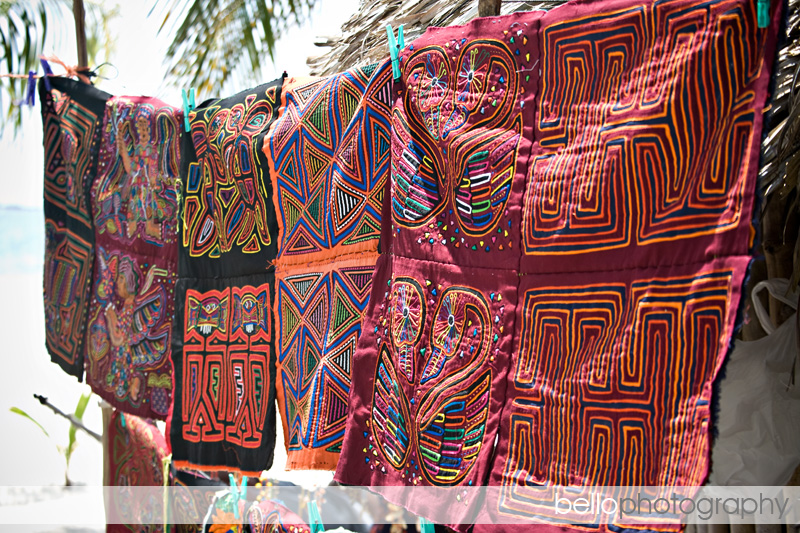
The Kuna used to wear few clothes and decorated their bodies with colorful designs. When encouraged to wear clothing by missionaries who visited the islands, they followed their body painting designs in their Molas, which are worn by traditional women in their clothing and are a big item to sell to tourists. The good ones, like these below, are hand made and feature more traditional designs. They’re gorgeous and incredibly intricate.
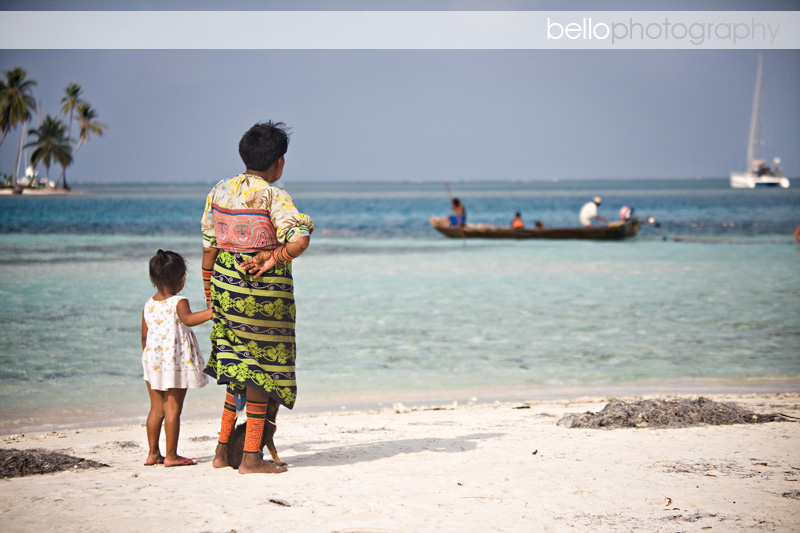
In addition to wearing molas sewn into their tops, the more traditional Kuna women, like this woman below, also wear rows of beads tied together in patterns on their legs. The bright colors are beautiful and pop against the blue background that constantly surrounds the islands. Below a Kuna woman and her granddaughter watch, with a puppy at their feet, as a boat of young men cast their nets for fish. I love this photo, even with the contrast of the expensive catamaran anchored in the background. The islands, with their natural beauty and the protection they provide from the open ocean, attract hundreds of boaters who drop anchor for weeks, months and sometimes years.
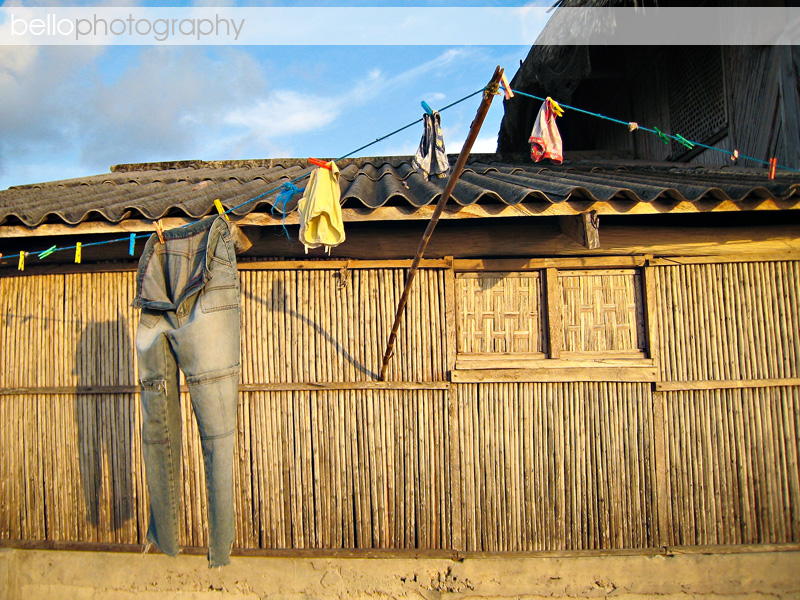
The contrast of old and new in the Kuna Yala is at once arresting and beautiful. Below western clothes hang on a clothesline as the evening sun warms the bamboo house.
This was the smallest island we saw, big enough for just one house. The truly amazing thing about this scene is the woman, who is the cousin of our guide, Orlando, came out of her palm and corrugated steel house carrying a purse and wearing modern clothes. Orlando picked her up to take her to the mainland, about a 45 minute boat ride away, to do some shopping. Can you imagine living here?
The Kuna Yala was exactly the break from modern day reality we needed and the perfect ending to a fabulous vacation. We absolutely loved Panama and will be posting a slideshow highlighting more picture perfect moments from our super fun trip tomorrow. Stay tuned! Chris & Andy xo