
After a 17-year hiatus, the cicadas are back and more are coming – by the thousands.
A few weeks ago, we started noticing these strange nickel-size holes all over our front lawn. Some friends told us it was likely the Cape cicadas, otherwise known as Brood XIV Magicicada septendecim.
Large, ugly creatures with big beady red eyes and clear inch-long wings, cicadas look somewhat like locust or grasshoppers, but are taxonomically closer to shrimp, spiders and millipedes. The Cape cicadas last came out in swarms 17 years ago, before we moved here. Covering houses, cars and buildings for a few weeks during the month of June, they mated, laid their eggs and died off, while their offspring hatched from the trees where they were laid and promptly headed back underground.
I had hoped this was all just some kind of urban myth, that Andy was actually making the holes to freak me out and there was no such thing as swarming cicadas here on the Cape. Then the noise started. About a week ago, we noticed this loud humming sort of buzzing sound that reminded us of our vacation last year in the Nicaraguan jungle. And it hit us, the cicada are really coming!
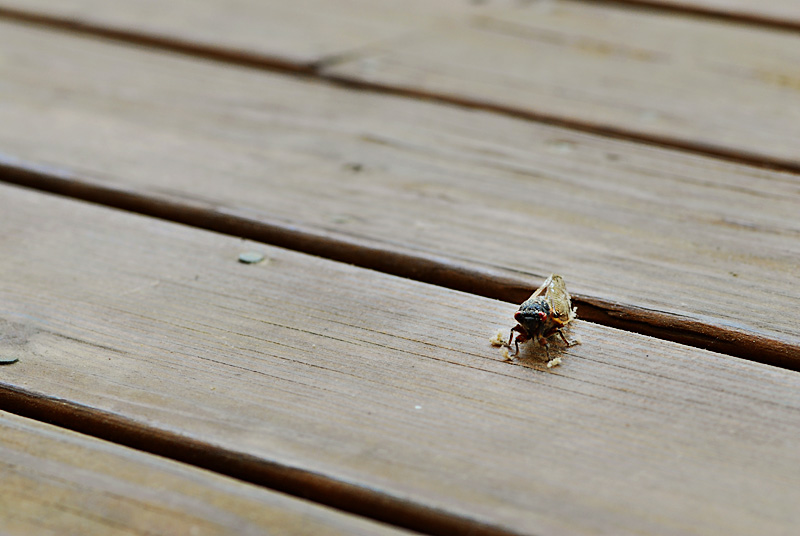
This morning, I went outside to check the mail, and resting on our front porch in the shade, while its new adult shell hardened, was an adult cicada covered in fine powdery pollen. I hate bugs, so this was a big deal for me. I grabbed my 105mm macro lens, got down close and took a few quick pictures, before scurrying off like a scared dog.
Meet the cicada:
I very cowardly slid a quarter in next to it to give you perspective on how big they are.
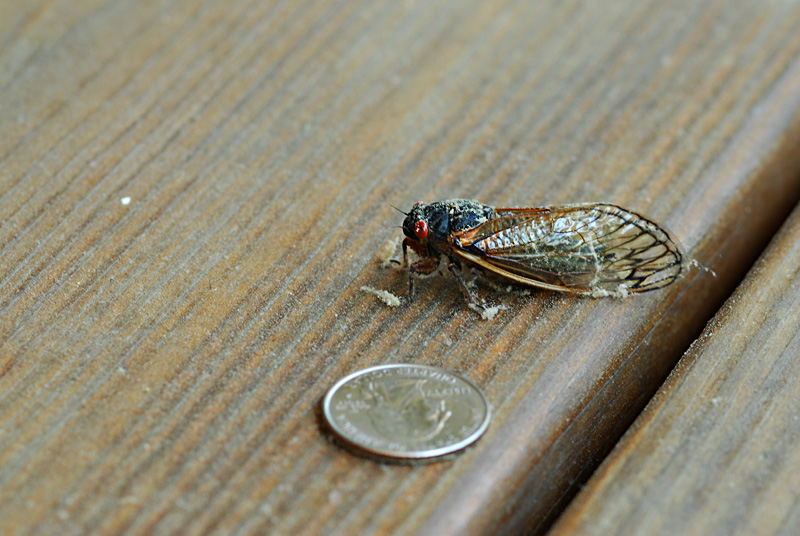
Keep your veils handy ladies as they could be useful in the next couple of weeks if these buggars really swarm like they say they do. I’m still holding on to hope that it won’t be as bad as some are predicting.
In Massachusetts, cicada typically don’t emerge any further north than the Cape. For some reason, Mashpee and Sandwich have been local hot spots for cicada citings….our house in particular has loads of holes strewn across the lawn. For the record, they’re reportedly harmless. They don’t bite or sting and really just live to love!
The cicada life cycle is a true wonder of nature. For 17 years the immature cicada live underground, sucking on tree roots. Then, towards the end of their life, when the ground warms up to about 64 degrees, the light brown colored nymphs emerge from the depths of darkness, shed their shells (and inhibitions) and go out in search of a mate or two…or two thousand.
Cicadas only live as adults for about three weeks, during which time they sing and shag like crazy. They lay hundreds of eggs on trees – proud markings of their zealous love-making. And when they can’t shag anymore, the adults die off, littering the ground with their spent corpses. And several weeks later, the fruits of their labor hatch from their eggs and a new generation makes its way back underground for a long hibernation.
Kind of a crazy life, but definitely something worth celebrating, since it’s unique to this area and happens only a handful of times in our lifetime.
Stay tuned for more cicada updates as I have a feeling this is just the beginning of their emergence. We’ll try and record their buzzing noise too. It really is quite loud. Andy is definitely the nature freak in our family, but I have to admit, even I think this is pretty cool! Creepy, but cool!
If you spot any cicadas in the next couple of weeks and can muster the courage to get close enough for a photo, please feel free to e-mail us your pics and we will happily put them on our blog to share.
Viva La Cicada!